



Dental Implants – Get Your Teeth Immediately, Without Disrupting Your Life
One of the biggest concerns for patients considering dental implants is not necessarily the implant placement itself, but: “After getting...
 Published: 04/04/2025
Dental Knowledge
Published: 04/04/2025
Dental Knowledge
Dental implant placement is one of the most commonly used methods for replacing missing teeth today. It helps restore both the tooth root and the crown, thereby supporting improvements in chewing function, aesthetics, and long-term stability.
However, for the treatment process to proceed smoothly and achieve favorable results, patients need to undergo a thorough examination and proper preparation before implant placement. Proper preparation not only helps the dentist create a suitable treatment plan, but also contributes to healing and osseointegration after implantation.
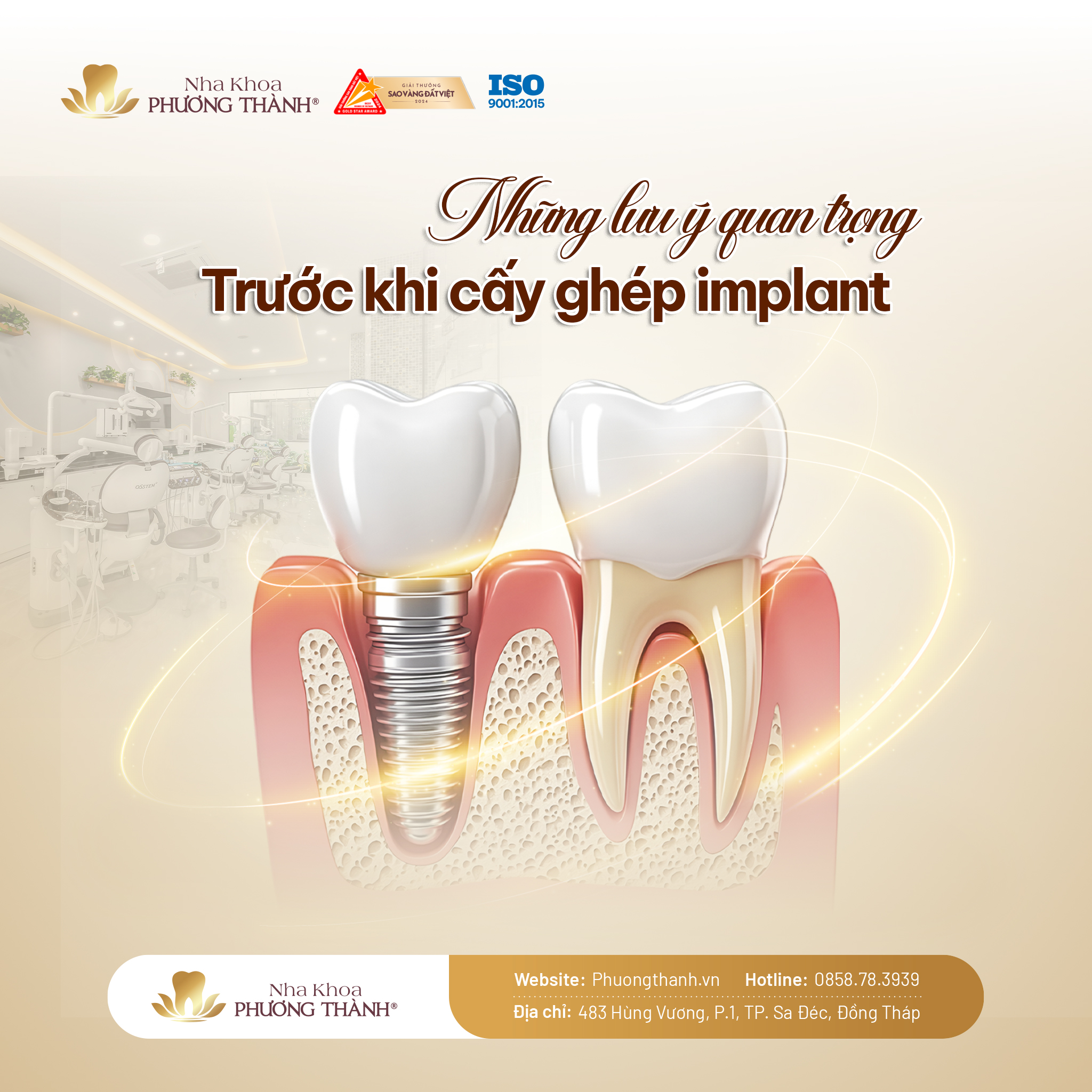
Not every case of tooth loss can receive an implant immediately. Before treatment, the dentist needs to comprehensively evaluate factors related to:
A careful evaluation from the beginning helps determine whether the patient is suitable for implant placement and at the same time reduces potential risks during treatment.
Before implant placement, the dentist will perform a clinical examination and imaging to assess the jawbone, gums, missing tooth site, and adjacent teeth. If there are issues such as:
… these conditions should be treated before implant placement.
This is a very important step because a stable and clean oral environment will better support the healing and osseointegration process.
An implant is a titanium fixture placed into the jawbone to replace the missing tooth root, so the jawbone plays a foundational role in implant stability.
If the tooth has been missing for a long time, the jawbone may undergo bone resorption, reducing the height or width of the bone at the implant site. In such cases, the dentist may need to consider supportive procedures such as:
Accurate assessment of the jawbone from the outset helps improve the ability to create a safer and more effective treatment plan.
Certain systemic conditions may affect healing after implant placement, especially if they are not well controlled. Conditions that commonly require special attention include:
This does not mean that patients with underlying medical conditions cannot receive implants, but they do require careful assessment and appropriate coordination of care before treatment.
Providing a complete medical history, current medications, and present health status will help the dentist make safer clinical decisions.
There are currently many different implant systems available, each with its own design, origin, and clinical characteristics. The choice of implant should not be based solely on cost, but should also take into account:
A suitable implant system should meet the requirements for biocompatibility, primary stability, and long-term treatment orientation.
Many people feel anxious when they hear the term “implant surgery,” but in reality, this is a procedure performed under a sterile protocol and with local anesthesia.
During the consultation, the dentist will clearly explain:
When patients clearly understand the process and are well prepared, they often feel more reassured before starting treatment.
Before and after implant placement, the care regimen also plays an important role in supporting healing. After the procedure, patients are often advised to:
Proper post-implant care will help the gum tissue and the bone surrounding the implant heal more steadily.
For an implant case to achieve favorable results, the key factor lies not only in placing the implant fixture, but also in diagnosis, treatment planning, and post-treatment follow-up. Each case of tooth loss has its own characteristics in terms of jawbone condition, occlusion, chewing habits, and overall health status.
That is why careful examination and proper preparation before implant placement are essential steps to support the stability, chewing ability, and long-term durability of the restoration.
At Phuong Thanh Dental Clinic, every case of tooth loss is carefully examined, imaged, and comprehensively evaluated before any implant indication is made. The treatment plan is developed based on the condition of the jawbone, oral health, and actual restorative needs, helping support a safer and more appropriate treatment process for each patient.
One of the biggest concerns for patients considering dental implants is not necessarily the implant placement itself, but: “After getting...

Dental Floss – A Small Tool with a Big Role in Oral Care Dental floss is one of the oral...

Parents should not overlook common oral health problems in children such as tooth decay, gingivitis, pulpitis, and tongue-tie. Early detection...

What Are Exogenous Chromogenic Stains on Teeth? Images of Exogenous Chromogenic Stains on Teeth Exogenous chromogenic stains on teeth are...
WORKING HOURS