

Dental Implants – Get Your Teeth Immediately, Without Disrupting Your Life
One of the biggest concerns for patients considering dental implants is not necessarily the implant placement itself, but: “After getting...
 Published: 02/04/2025
Dental Knowledge
Published: 02/04/2025
Dental Knowledge
In addition to brushing and flossing, mouthwash is a supportive oral care product used by many people every day. However, to achieve the best results, mouthwash needs to be used with the right type, at the right time, and in the right way.
When used appropriately, mouthwash can help clean the oral cavity, reduce bad breath, and support gum and tooth care. On the other hand, if overused or used incorrectly, this product may not deliver the desired benefits.
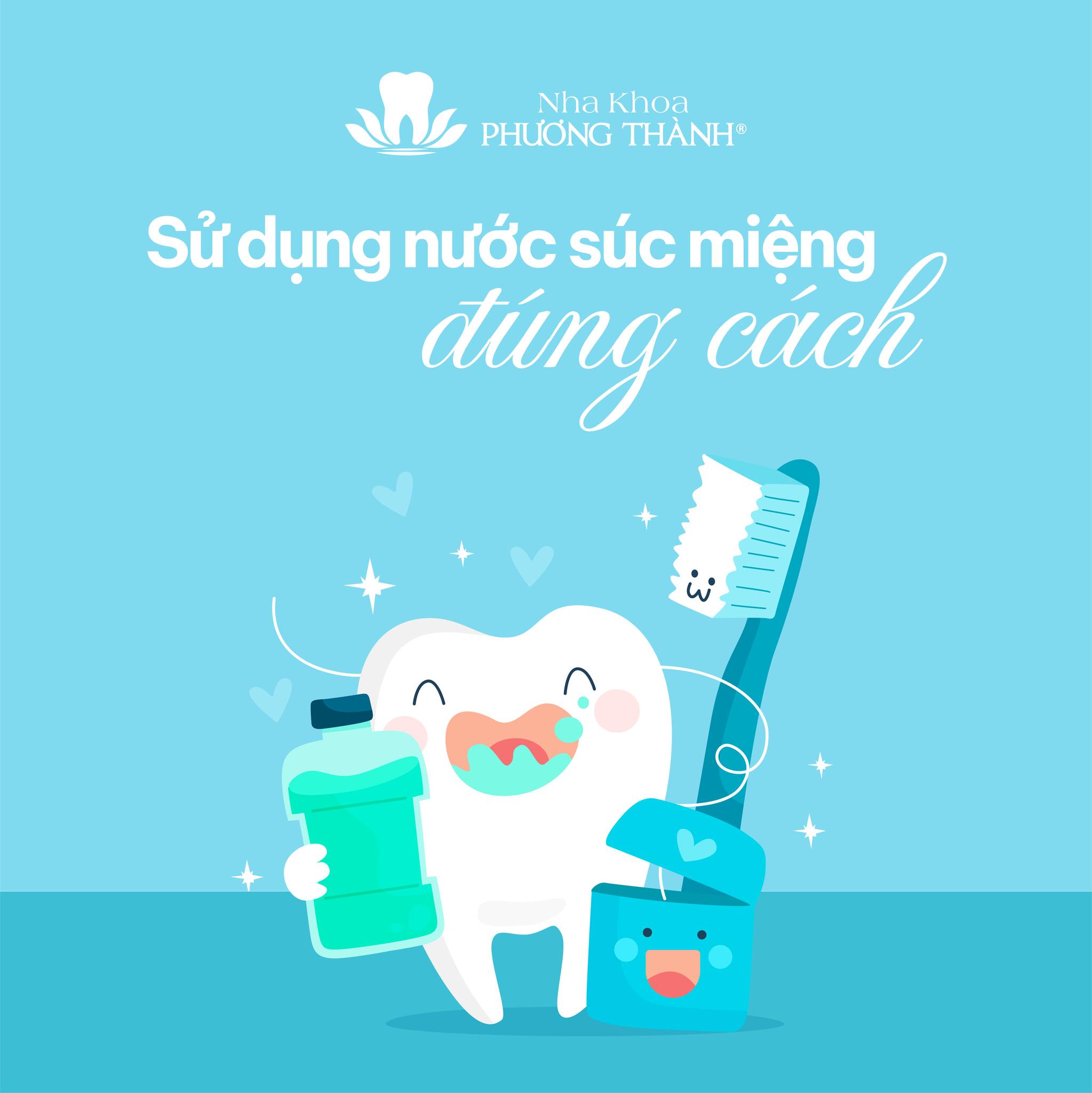
Mouthwash does not replace tooth brushing, but it can play a supportive role in your daily oral hygiene routine. Depending on its ingredients, mouthwash may offer several benefits such as:
Today, there are many types of mouthwash with different purposes, such as helping prevent cavities, reducing gum inflammation, reducing bad breath, or supporting care after dental treatment. Therefore, choosing the right product is a very important step.
To help mouthwash work more effectively, you can follow these steps:
Mouthwash should be used after brushing your teeth to further support oral cleaning. This helps remove plaque and food debris while allowing the ingredients in the mouthwash to come into better contact with your teeth and gums.
If possible, you should also use dental floss or a water flosser before rinsing to improve cleaning effectiveness.
Each product has its own instructions, but in general, you should only use the recommended amount stated on the packaging or as advised by your dentist.
Do not use too much with the assumption that it will clean better, as this does not necessarily provide greater effectiveness.
Hold and swish the mouthwash evenly around your mouth for about 30 seconds to 1 minute, allowing the solution enough time to contact your teeth, gums, tongue, and hard-to-clean areas.
While rinsing, move the liquid around your mouth instead of keeping it in one spot to help clean the entire oral cavity.
After rinsing, you should spit it out completely and absolutely not swallow the mouthwash.
This product is intended for use in the oral cavity only and may contain ingredients that are not suitable for swallowing, especially for young children.
After use, you should avoid eating or drinking for about 30 minutes so the active ingredients in the mouthwash have more time to work effectively.
If you drink water or eat immediately after rinsing, the supportive cleaning and protective effects may be reduced.
Although it is a common product, mouthwash still needs to be used properly to avoid misuse or overuse.
Not every type of mouthwash is suitable for everyone. Depending on your oral condition, you may need a specific type such as:
If you are dealing with issues such as gum inflammation, mouth ulcers, dry mouth, or ongoing dental treatment, you should consult your dentist before using it.
Many people rinse too many times a day hoping for fresher breath or a cleaner mouth. However, overuse may affect the natural balance of the oral environment.
In general, it should only be used about 1–2 times per day, unless otherwise instructed by your dentist.
This is very important. Even if you use mouthwash regularly, you still need to maintain a complete oral hygiene routine, including:
Mouthwash is only a supportive step and cannot completely replace mechanical cleaning with a toothbrush and dental floss.
When used appropriately, mouthwash can become a helpful part of your daily oral care routine. However, the most important thing is still maintaining comprehensive oral hygiene and choosing a product that matches your actual needs.
If you are experiencing persistent bad breath, gum inflammation, recurrent tooth decay, or tooth sensitivity, you should get a dental examination to identify the cause rather than relying only on mouthwash.
At Phuong Thanh Dental Clinic, the dentist will examine and recommend a suitable oral care solution based on each person’s actual dental and gum condition. Choosing the right products and maintaining proper hygiene habits can help support more stable and long-term oral health.
One of the biggest concerns for patients considering dental implants is not necessarily the implant placement itself, but: “After getting...
Dental Floss – A Small Tool with a Big Role in Oral Care Dental floss is one of the oral...

Parents should not overlook common oral health problems in children such as tooth decay, gingivitis, pulpitis, and tongue-tie. Early detection...
What Are Exogenous Chromogenic Stains on Teeth? Images of Exogenous Chromogenic Stains on Teeth Exogenous chromogenic stains on teeth are...
WORKING HOURS