
Dental Implants – Get Your Teeth Immediately, Without Disrupting Your Life
One of the biggest concerns for patients considering dental implants is not necessarily the implant placement itself, but: “After getting...
 Published: 04/11/2024
Dental Knowledge
Published: 04/11/2024
Dental Knowledge
During orthodontic treatment, not everyone begins right away with braces or the main orthodontic appliance. In some cases, the dentist may recommend placing orthodontic separators as an initial preparatory step to help the treatment process proceed more smoothly.
Although it is a small procedure, orthodontic separators play a fairly important role in certain orthodontic treatment plans, especially when space needs to be created before placing appliances such as orthodontic bands or other supporting devices.
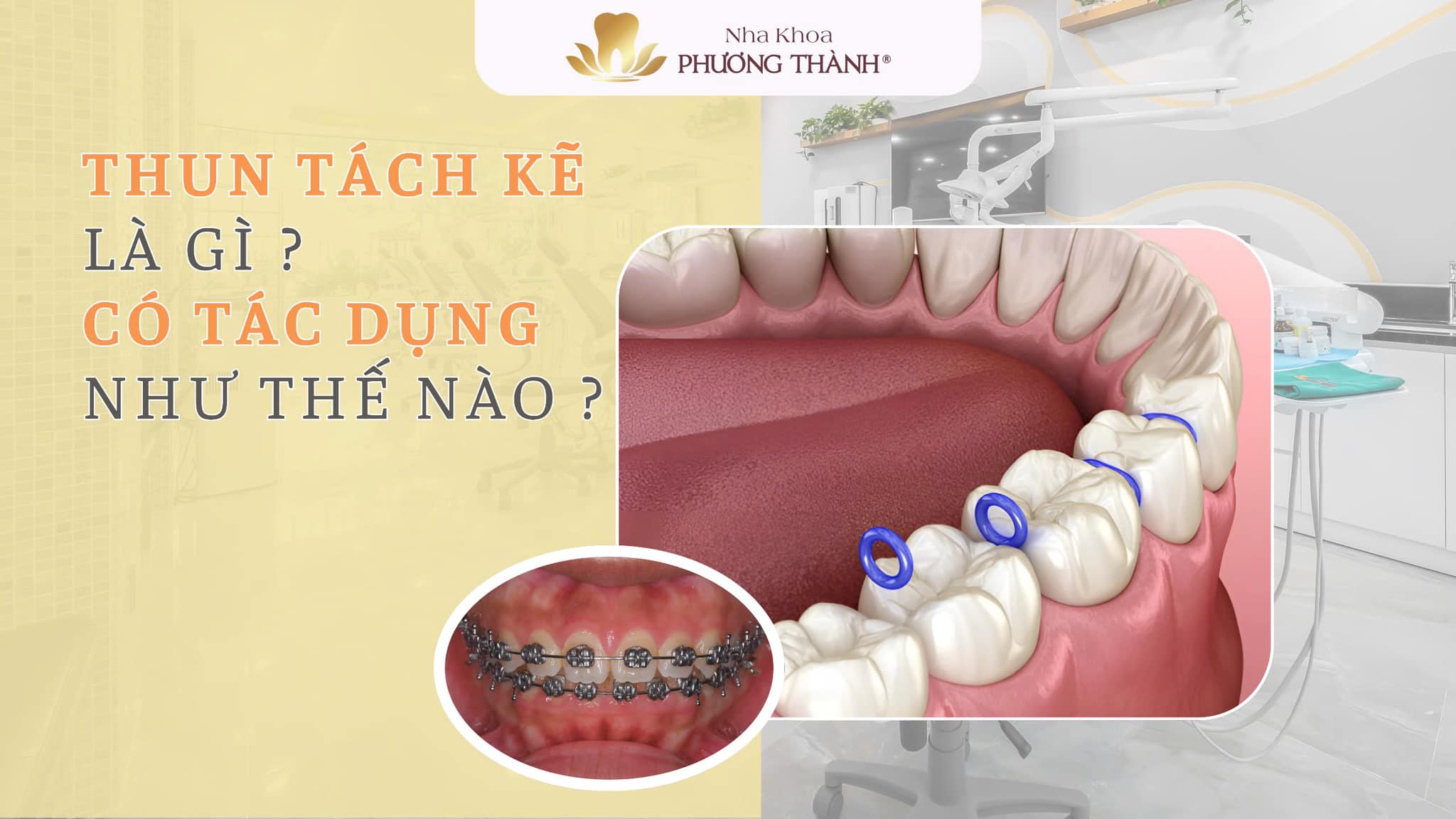
Orthodontic separators are small elastic rings placed into the contact space between two teeth, usually in the molar area. Their purpose is to create a very small temporary gap between the teeth so the dentist can place orthodontic appliances more easily and accurately.
Orthodontic separators are usually used before:
Not every braces case requires separators. Their use depends on the specific recommendation of the dentist after examination and treatment planning.
Although they are only an initial preparatory step, orthodontic separators can provide important benefits during orthodontic treatment when indicated appropriately.
This is the most important role of orthodontic separators. When placed between two teeth, they create a small temporary gap, allowing the dentist enough space to:
Although this space is very small, it plays an important role in ensuring the appliances are placed in the correct position.
In people whose teeth are in very tight contact, placing certain orthodontic appliances can be difficult without prior preparation. In these cases, separators help to:
This is a small step, but it can help reduce difficulties during the early stage of orthodontic treatment.
When orthodontic appliances are placed correctly and function stably from the beginning, the entire orthodontic treatment plan has a better foundation to proceed effectively.
In other words, orthodontic separators do not directly straighten the teeth, but they are an important supporting step that helps the orthodontic appliances used afterward function more accurately and effectively.
This is a question many people ask before starting braces treatment. In reality, after separators are placed, some people may feel:
This discomfort usually occurs because the separators are applying gentle pressure to create space between the teeth. This is a relatively common response and usually decreases after a few days.
However, the sensation can vary from person to person depending on:
After separator placement, patients undergoing orthodontic treatment should keep a few things in mind to avoid affecting treatment effectiveness:
If a separator falls out or causes unusually prolonged discomfort, you should contact your dentist for an earlier check-up.
Many people tend to focus only on brackets, archwires, or aligners and overlook initial preparatory steps such as separators. However, in orthodontics, each stage has its own role and contributes to the final treatment outcome.
When indicated appropriately, orthodontic separators help the appliance placement and orthodontic treatment process proceed more smoothly, accurately, and effectively.
At Phuong Thanh Dental Clinic, every orthodontic treatment plan is developed based on clinical examination, bite analysis, and the specific treatment needs of each patient. Preparatory steps such as placing orthodontic separators will be recommended by the dentist when necessary to help the braces process proceed according to plan and remain more stable in the long term.
One of the biggest concerns for patients considering dental implants is not necessarily the implant placement itself, but: “After getting...
Dental Floss – A Small Tool with a Big Role in Oral Care Dental floss is one of the oral...

Parents should not overlook common oral health problems in children such as tooth decay, gingivitis, pulpitis, and tongue-tie. Early detection...
What Are Exogenous Chromogenic Stains on Teeth? Images of Exogenous Chromogenic Stains on Teeth Exogenous chromogenic stains on teeth are...
WORKING HOURS