



Dental Implants – Get Your Teeth Immediately, Without Disrupting Your Life
One of the biggest concerns for patients considering dental implants is not necessarily the implant placement itself, but: “After getting...
 Published: 21/10/2024
Dental Knowledge
Published: 21/10/2024
Dental Knowledge
Temporomandibular joint disorder (TMJ disorder) is a condition in which the joint connecting the lower jaw to the skull functions unstably or does not coordinate smoothly as it normally should. When this joint is affected, patients may experience jaw pain, difficulty opening the mouth, clicking sounds while chewing, or a feeling that the jaw is misaligned, fatigued, or even temporarily locked at certain times.
This is a fairly common condition, but it is often overlooked in the early stages because symptoms may appear subtly, intermittently, or be mistaken for toothache, jaw muscle fatigue, or normal chewing habits.

The temporomandibular joint is the joint that allows us to perform activities such as:
When this system loses balance between the joint – muscles – teeth – bite, patients may develop a variety of uncomfortable symptoms that can significantly affect daily life.
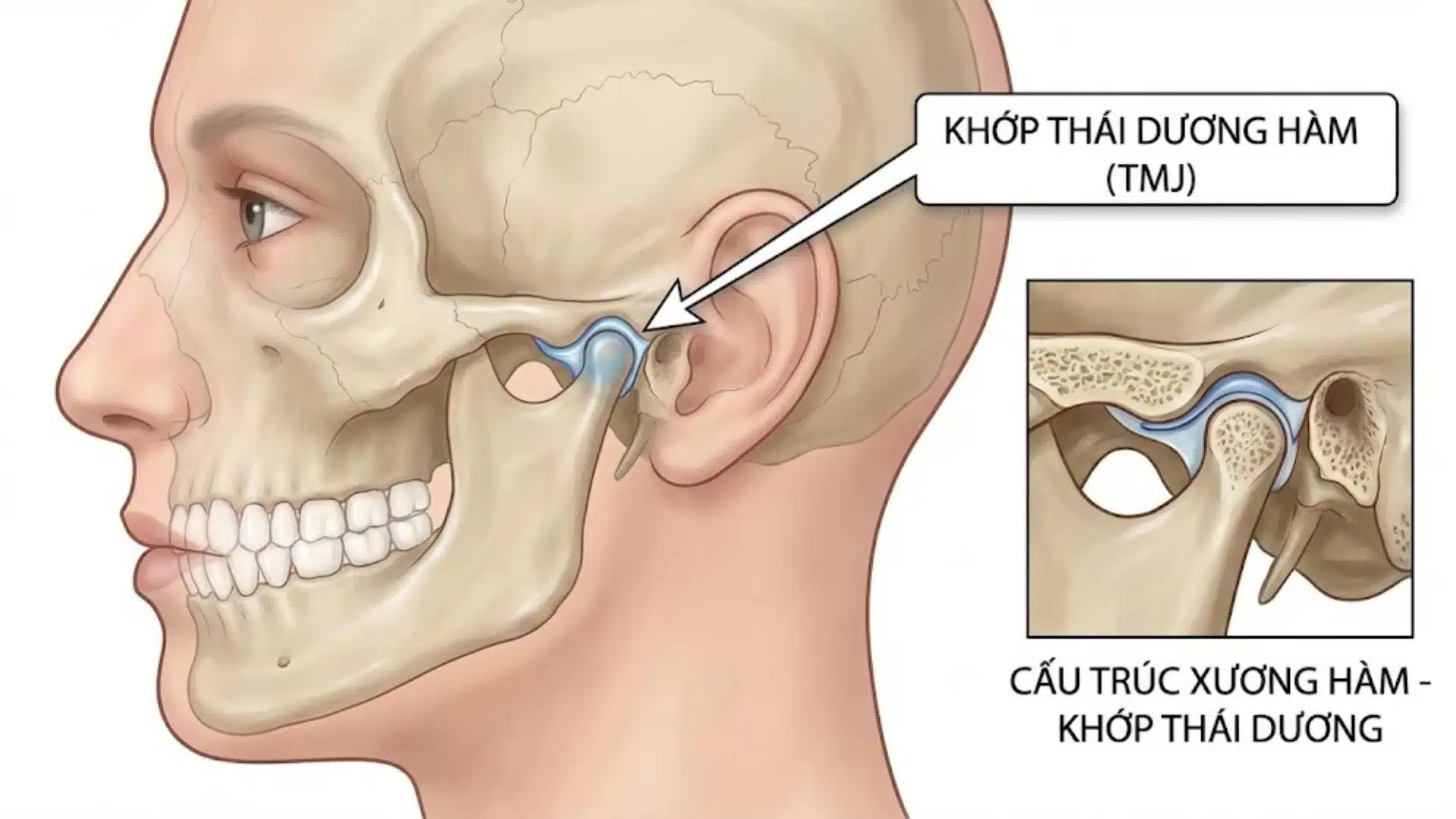
Before understanding the causes, many people often notice symptoms such as:
If these signs persist or recur frequently, patients should be examined to identify the cause and determine the appropriate treatment approach.
Temporomandibular joint disorder often does not arise from a single cause, but may instead be associated with multiple contributing factors over a prolonged period of time.
One of the most common causes is an unstable bite or improperly aligned teeth, such as:
When the teeth and bite are not in proper harmony, chewing forces may be distributed unevenly, creating abnormal pressure on the temporomandibular joint and chewing muscles.
Teeth grinding is a fairly common risk factor, but many people are unaware of it, especially when it occurs during sleep.
When teeth grinding persists over time, the teeth – muscles – joint system is subjected to repeated pressure for long periods, which may lead to:
In addition to grinding, the habit of clenching the teeth during stress may also contribute to overloading the jaw joint.
People who have experienced accidents, impacts, or trauma to the jaw and face are also at higher risk of developing temporomandibular joint problems, especially if the trauma directly affects:
In some cases, an old injury may not cause obvious symptoms immediately, but it can still leave long-term effects on joint function.
Some everyday habits that may seem harmless can also affect the temporomandibular joint if they continue over time, such as:
When the jaw repeatedly functions unevenly on one side or is subjected to excessive force, the risk of overloading the joint and chewing muscles increases over time.
Psychological factors may also be associated with temporomandibular joint disorder. People who frequently experience stress, anxiety, or prolonged pressure tend to be more likely to develop:
In many cases, stress is not the sole cause, but it can make symptoms more noticeable or prolonged.
In some individuals, temporomandibular joint disorder may be related to abnormal coordination of the neuromuscular system in the chewing area, which can alter muscle reflexes, jaw movement, or the ability to control biting force.
These factors may increase the risk of:
If symptoms only appear briefly, many people tend to underestimate or ignore them. However, when the condition persists or recurs frequently, early examination is highly important.
Timely treatment may help:
Each case may require a different management approach depending on the cause, ranging from habit adjustments and bite control to more in-depth intervention if necessary.
At Phuong Thanh Dental Clinic, patients suspected of having temporomandibular joint disorder will be carefully evaluated by the dentist based on clinical symptoms, bite condition, and jaw movement function. Accurately identifying the cause is an important step in developing an appropriate treatment plan and supporting more stable long-term improvement.
One of the biggest concerns for patients considering dental implants is not necessarily the implant placement itself, but: “After getting...
Dental Floss – A Small Tool with a Big Role in Oral Care Dental floss is one of the oral...
Parents should not overlook common oral health problems in children such as tooth decay, gingivitis, pulpitis, and tongue-tie. Early detection...
What Are Exogenous Chromogenic Stains on Teeth? Images of Exogenous Chromogenic Stains on Teeth Exogenous chromogenic stains on teeth are...
WORKING HOURS