




Dental Implants – Get Your Teeth Immediately, Without Disrupting Your Life
One of the biggest concerns for patients considering dental implants is not necessarily the implant placement itself, but: “After getting...
 Published: 07/10/2024
Dental Knowledge
Published: 07/10/2024
Dental Knowledge
Tongue-tie is a condition in which the lingual frenulum – the band of tissue located under the tongue – is too short, too thick, or abnormally attached, causing the tongue’s movement to be more restricted than normal. This condition may affect several important functions such as breastfeeding, swallowing, speech development, and tongue movement during a child’s growth.
In some cases, tongue-tie is detected quite early, shortly after birth. However, there are also cases that are only recognized when the child begins to show signs such as difficulty feeding, slow weight gain, delayed speech, or unclear pronunciation.
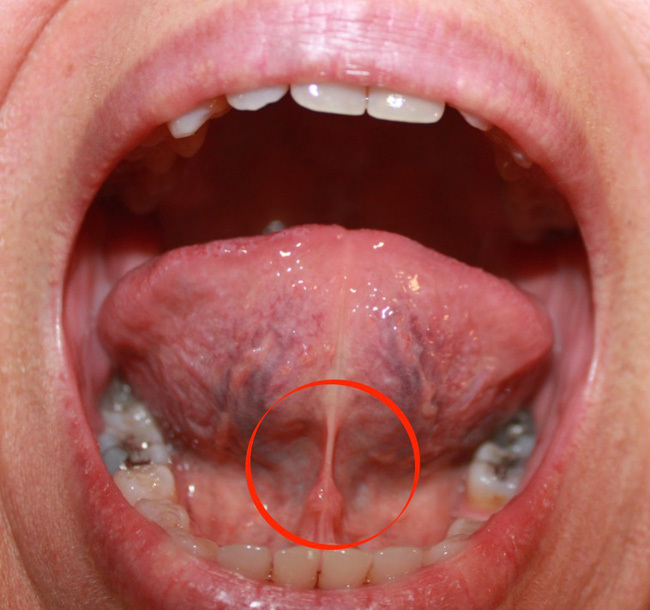
The lingual frenulum is a soft band of tissue located on the underside of the tongue. Its role is to help stabilize the tongue and allow it to move within a normal range.
When the lingual frenulum is:
this condition is called tongue-tie.
The tongue is a very important structure involved in many daily functional activities. Therefore, when tongue movement is restricted, children may experience difficulties to varying degrees depending on the specific condition.
The degree of impact is not the same for every child. Some babies show only mild signs, while others may need early monitoring and intervention if the condition clearly affects function.
Most cases of tongue-tie in children can be detected within the first few weeks or first few months after birth, especially during routine health checkups or when parents notice unusual signs during feeding.
Beyond the newborn stage, tongue-tie may also be detected later when the child begins learning to speak and develops issues related to pronunciation or tongue movement.
 |
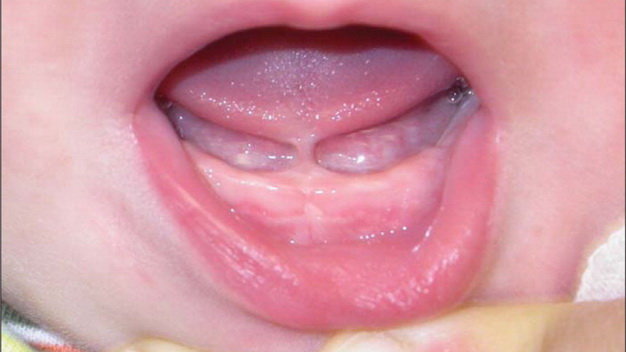 |
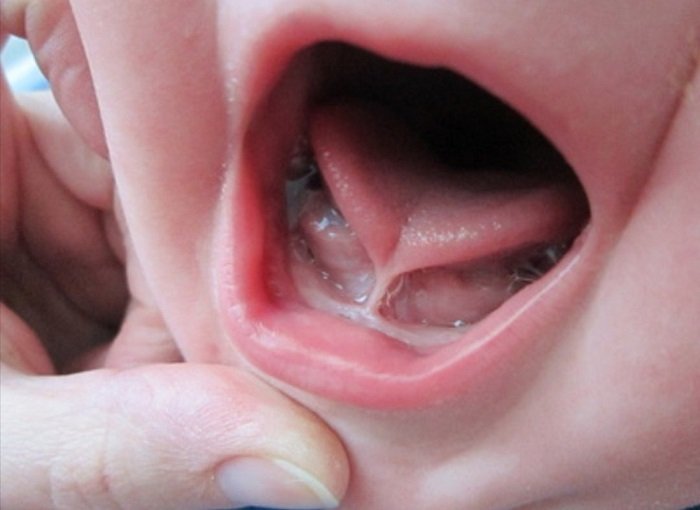
In many cases, tongue-tie can be noticed through direct observation. However, to accurately determine the degree of impact and whether intervention is necessary, the child should still be examined by a doctor.
When the child tries to stick the tongue out, the tip may be pulled inward in the middle, creating a heart shape or a V shape. This is one of the more characteristic signs of a short lingual frenulum attachment.
In some children, the tongue tip may appear flat, square, or blunt instead of naturally pointed.
The child may have difficulty trying to extend the tongue beyond the lips or may only be able to stick it out slightly.
When tongue movement is restricted, the child may not be able to:
These are important movements for both speech and normal tongue function.
Some children with tongue-tie may have difficulty moving the tongue left and right, which reduces tongue flexibility during eating and speaking.
As the child grows older, if the tongue cannot move flexibly enough, they may have difficulty pronouncing certain sounds that require precise coordination of the tongue tip.
However, not every case of delayed speech or unclear pronunciation is caused by tongue-tie. Therefore, the underlying cause should be properly evaluated before deciding on treatment.
In some cases, a prolonged abnormal lingual frenulum may be associated with:
This does not always occur, but it is still a factor that should be monitored during the child’s oral development.
Not all cases of tongue-tie require immediate intervention. The decision to treat usually depends on:
A proper professional examination is very important to avoid unnecessary intervention or missing cases that require early treatment.
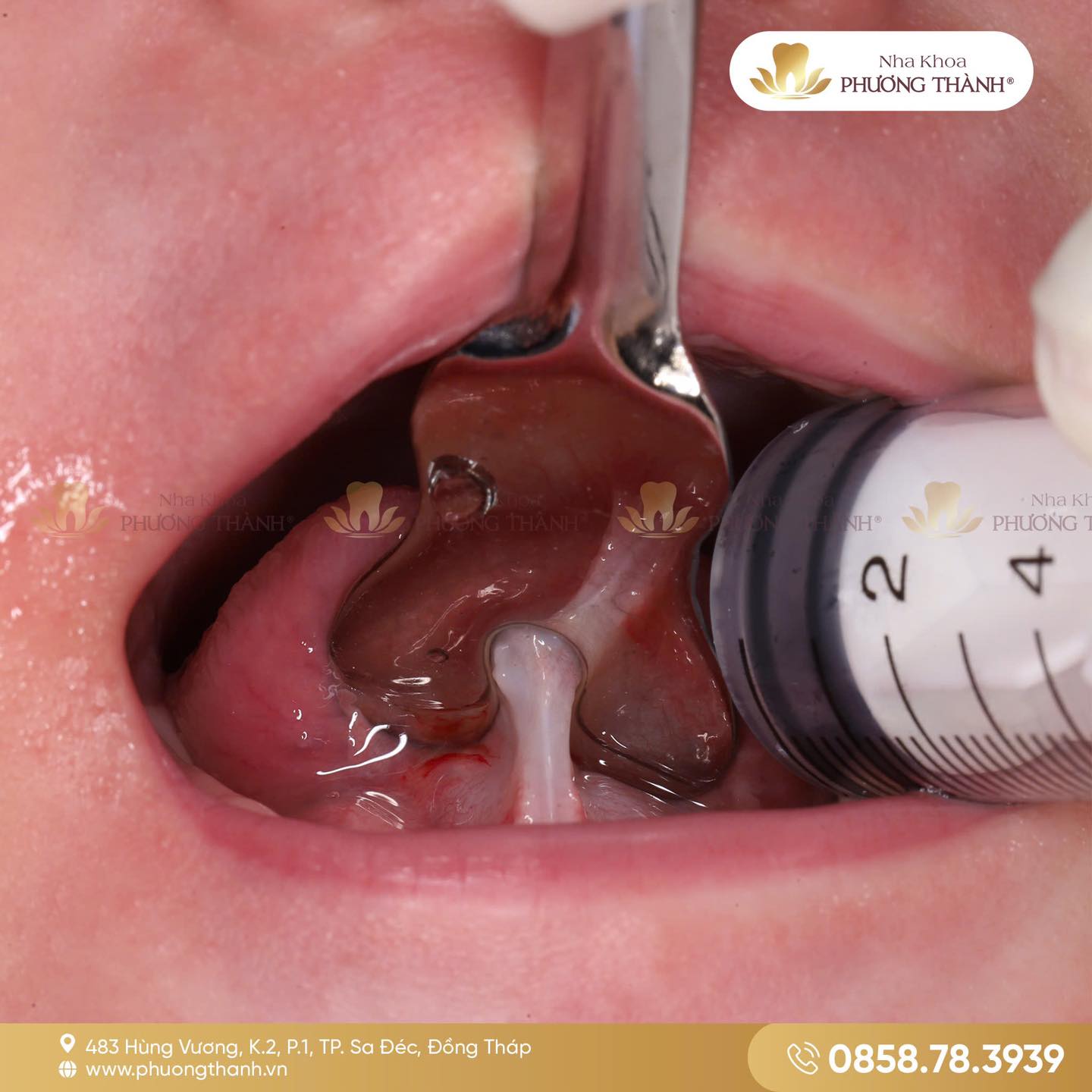
At Phuong Thanh Dental Clinic, children suspected of having tongue-tie will be carefully examined by the dentist for the shape of the frenulum, the range of tongue movement, and the degree to which it affects the child’s actual function. Early detection and accurate assessment help determine whether monitoring or intervention is the most appropriate option for each child.
One of the biggest concerns for patients considering dental implants is not necessarily the implant placement itself, but: “After getting...

Dental Floss – A Small Tool with a Big Role in Oral Care Dental floss is one of the oral...
Parents should not overlook common oral health problems in children such as tooth decay, gingivitis, pulpitis, and tongue-tie. Early detection...
What Are Exogenous Chromogenic Stains on Teeth? Images of Exogenous Chromogenic Stains on Teeth Exogenous chromogenic stains on teeth are...
WORKING HOURS