


Dental Implants – Get Your Teeth Immediately, Without Disrupting Your Life
One of the biggest concerns for patients considering dental implants is not necessarily the implant placement itself, but: “After getting...
 Published: 20/04/2026
Dental Knowledge
Published: 20/04/2026
Dental Knowledge
Many people know that baby teeth are the first teeth that appear in young children, but not everyone clearly understands what baby teeth are, their characteristics, and their role in a child’s development. So when do children lose their baby teeth? All of these questions will be answered in detail in the article below.

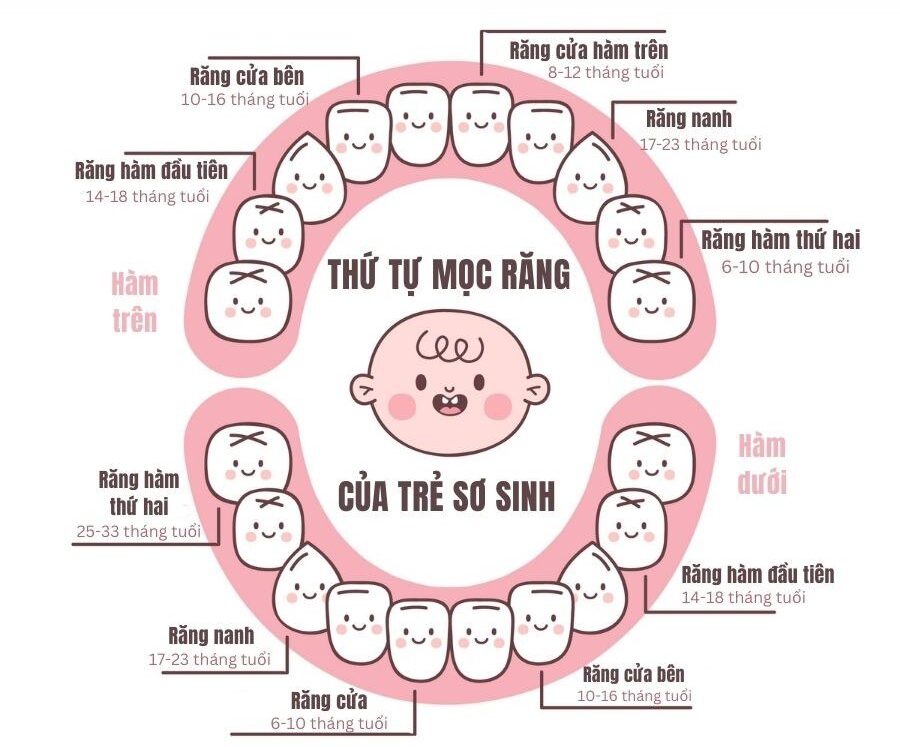
Baby teeth, also known as primary teeth or deciduous teeth, are the first set of teeth that appear in a child’s mouth. They begin forming during the fetal stage, usually erupt when a baby is around 6 months old, and are fully developed by about 2.5 years of age. Typically, each child has a total of 20 baby teeth.
At the stage of tooth replacement, these teeth will gradually fall out to make room for permanent teeth. However, if baby teeth do not fall out at the right time, children may experience crowding or overlapping teeth.
Compared to permanent teeth, baby teeth have several distinct differences in size, shape, and structure. Some noticeable characteristics include:
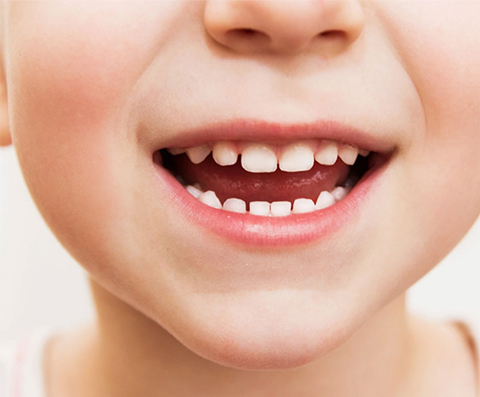
After understanding what baby teeth are, it is also important to know their vital role in a child’s early development. Baby teeth provide several essential functions such as:
In addition, losing baby teeth too early can affect the eruption of permanent teeth. Gaps left by missing teeth can cause new teeth to grow crowded, misaligned, or lead to bite issues later on.
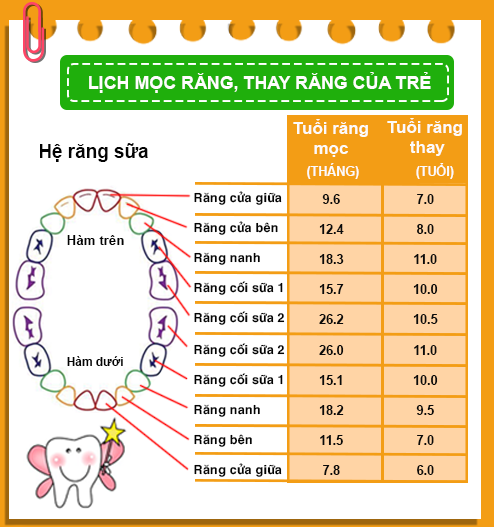
Baby teeth usually start erupting when a child is between 6–10 months old, and by around 3–4 years old, children will have a full set of 20 baby teeth. The shedding process typically begins at around 6 years old and follows the original eruption order.
Typically, the central incisors are the first baby teeth to fall out, while the second molars (tooth number 5) are usually the last, around the age of 12. After baby teeth fall out, permanent teeth will gradually erupt in their place.
Common timing for upper baby teeth replacement:
Typical timing for lower baby teeth replacement:
After baby tooth extraction, children should eat soft, easy-to-swallow foods that require minimal chewing to avoid irritating the extraction site and to help the wound heal faster. Suitable foods include:
Additionally, ensure the child drinks enough water and eats in small portions if there is still sensitivity. In the first 1–2 days, avoid hard, chewy, hot, spicy, or overly sweet foods as they may cause pain and irritation.
Many parents believe that baby teeth will eventually be replaced by permanent teeth, so when children experience tooth decay, pulpitis, or other dental issues, treatment is unnecessary. This misconception leads to inadequate care of baby teeth. In reality, baby teeth play a crucial role in a child’s development. They not only support chewing and biting but also affect speech and aesthetics during communication.
Moreover, baby teeth help maintain space for permanent teeth to erupt properly and support balanced jaw development. Therefore, parents should pay attention to caring for their child’s baby teeth from an early age.
Proper oral hygiene is essential for maintaining children’s dental health:
In addition to proper oral care, parents should also understand which foods benefit children’s teeth and limit foods and drinks that may harm enamel.
Additionally, limit children’s intake of sugary and acidic foods such as carbonated drinks, candies, and bottled soft drinks, as these can increase the risk of tooth decay and enamel erosion.
During the baby teething stage (usually from 6–10 months old), children may become fussy, drool excessively, or develop a mild fever due to swollen and sore gums. However, parents can help relieve discomfort with appropriate care methods.
After baby tooth extraction, children usually feel mild discomfort and can recover within 1–3 days with proper care. Appropriate care helps stop bleeding, reduce pain, and prevent infection.
Steps to follow immediately after extraction:
PHUONG THANH DENTAL CLINIC
Sa Dec Branch: 483 Hung Vuong, Cai Son Hamlet, Sa Dec Ward, Dong Thap Province.
Hotline: 02773 95 6868
Cao Lanh Branch: 783 Pham Huu Lau, Cao Lanh Ward, Dong Thap Province (Dong Thap University Campus)
Hotline: 02773 95 6869
P.T.T
One of the biggest concerns for patients considering dental implants is not necessarily the implant placement itself, but: “After getting...
Dental Floss – A Small Tool with a Big Role in Oral Care Dental floss is one of the oral...
Parents should not overlook common oral health problems in children such as tooth decay, gingivitis, pulpitis, and tongue-tie. Early detection...
What Are Exogenous Chromogenic Stains on Teeth? Images of Exogenous Chromogenic Stains on Teeth Exogenous chromogenic stains on teeth are...
WORKING HOURS