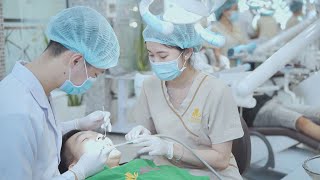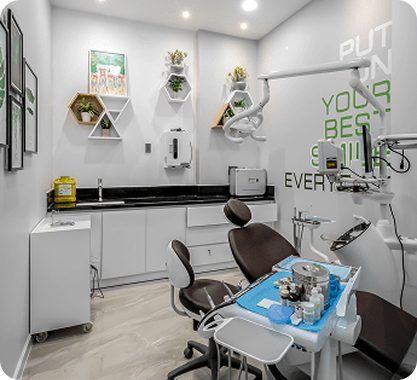


In recent years, there has been a growing trend of overseas Vietnamese returning to Vietnam for dental care. This is driven not only by more reasonable costs compared to many other countries, but also by the strong investment of Vietnam’s dental system in modern technology, highly qualified dentists, and dedicated patient care. With the desire to reconnect with their homeland while regaining a confident smile, many overseas Vietnamese choose reputable clinics such as Phuong Thanh Dental Clinic as a trusted destination for high-quality dental treatment and aesthetic services.
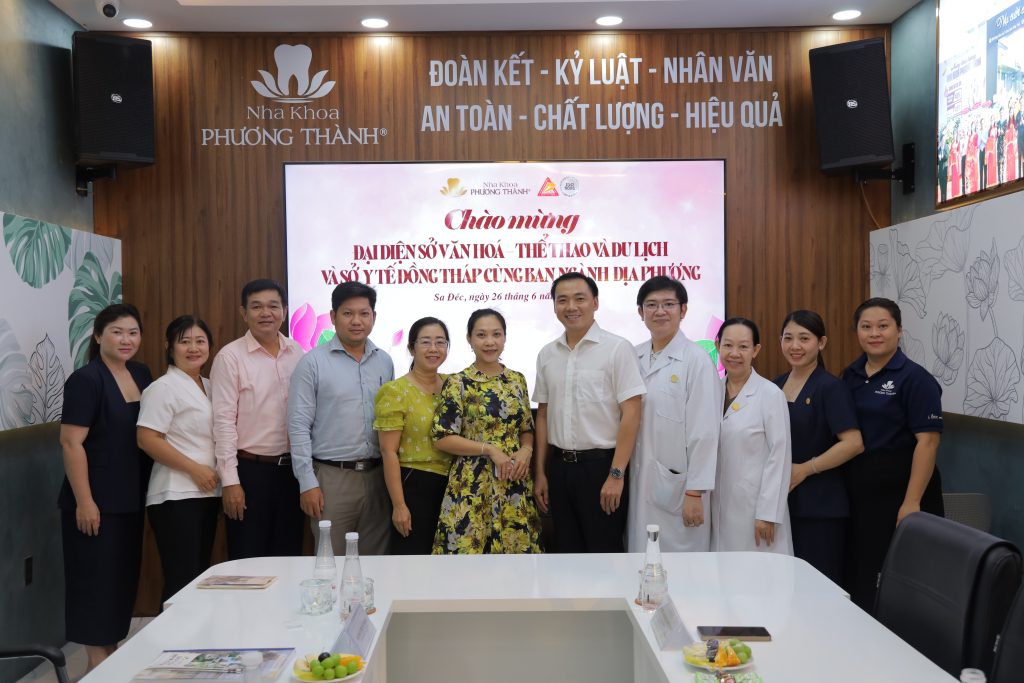
Phuong Thanh Dental Clinic offers a unique combination of high-quality dental care and cultural travel experiences in Sa Dec in particular and Dong Thap in general through its Dental Tourism model designed for overseas Vietnamese clients. This service aims to enhance the overall patient experience and create a truly memorable healing journey—from restoring smiles to nurturing the spirit.
Highly qualified, experienced, and dedicated dentists
Advanced technology: CT Cone Beam 3D, CAD/CAM, iTero, etc., meeting international standards
Reasonable costs, offering significant savings compared to treatment abroad
Attentive patient care services, supporting clients from consultation through treatment
Engaging travel experiences, from exploring nature, local cuisine, architecture, and history to discovering the people of Dong Thap
Personalized travel itineraries, tailored to each client’s preferences and needs, seamlessly integrated with the treatment plan to make the most of their time back in Vietnam






Dental treatment costs in Vietnam are generally much lower—often only about one-third of those in developed countries. As a result, patients can save 2–3 times compared to treatment in Europe, the U.S., or Australia, while still receiving international-standard quality.

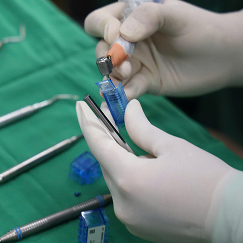
Major clinics have invested in advanced systems such as CT Cone Beam, CAD/CAM, iTero scanners, digital labs, and more—on par with many leading dental centers worldwide.
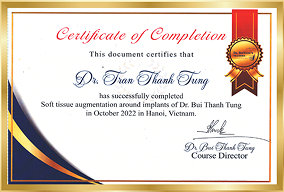
Dentists are well trained, hold international certifications, and have experience treating thousands of implant, restorative, and cosmetic cases.
Overseas Vietnamese patients are warmly welcomed and carefully guided, creating the comforting feeling of “coming home for dental care.”
Overseas Vietnamese can receive dental treatment while also visiting family, traveling, and experiencing Vietnam’s nature and culture.
Most dental clinics in Vietnam apply advanced techniques (such as implants and CAD/CAM restorations), helping overseas Vietnamese minimize their length of stay.

First, the dentist performs a comprehensive examination of the patient’s oral health. If there are existing dental conditions such as periodontal disease or gingivitis, these must be fully treated before implant placement. In addition, if the patient has underlying medical conditions such as high blood pressure, diabetes, or cardiovascular disease, they should be clearly disclosed so the dentist has complete information to develop an appropriate treatment plan.
The dentist will also prescribe diagnostic imaging, including dental X-rays and Cone Beam CT scans of the area with missing teeth, to evaluate bone density and jawbone thickness. In cases where teeth have been missing for a long time and significant bone loss has occurred, bone grafting may be required during the implant procedure. Blood tests are also performed to accurately assess clotting ability and screen other important health indicators.

Based on the examination results, the dentist will provide a thorough consultation and propose a suitable treatment plan, including specific costs and treatment timelines. If the patient agrees with this plan, an appointment will be scheduled for the dental implant procedure.
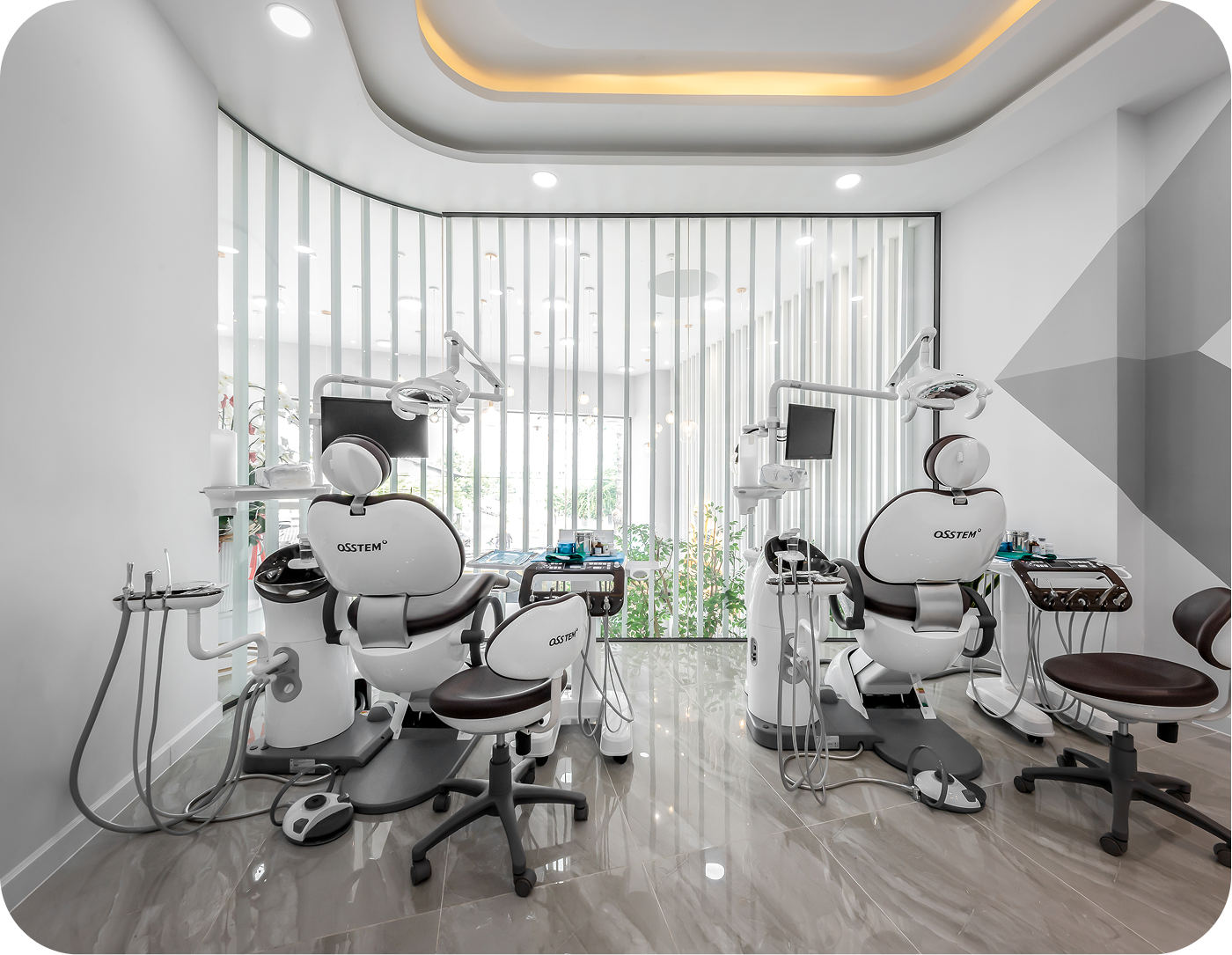
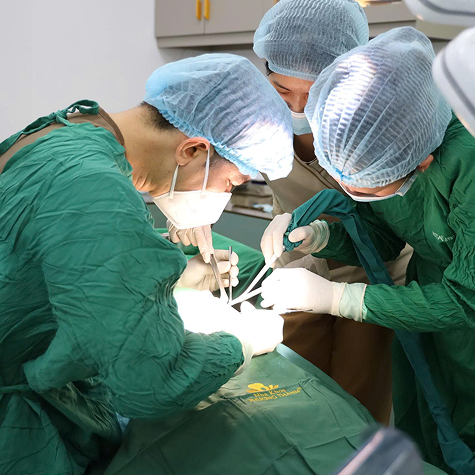
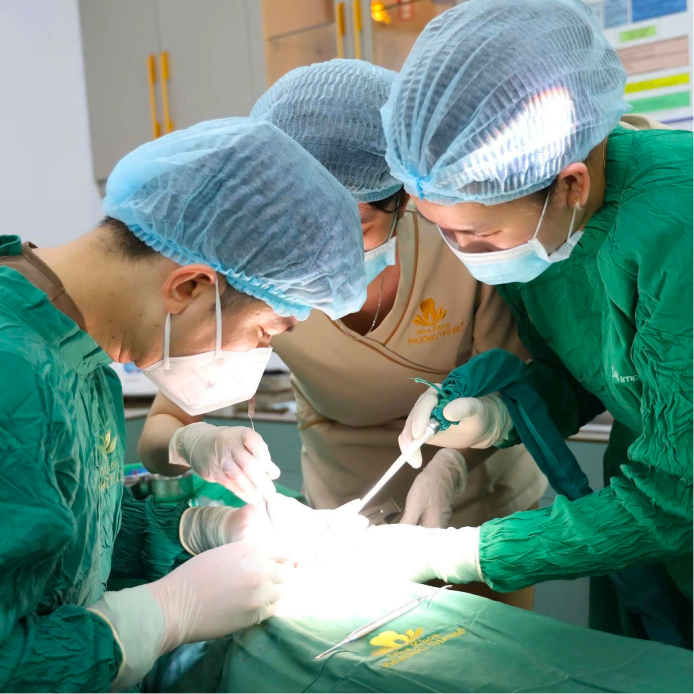
The dentist first performs a thorough oral cleaning for the patient, then administers local anesthesia and proceeds to place the dental implant directly into the jawbone. The implant surgery room is designed in accordance with international standards. The high-end surgical chair imported from South Korea features a fully sterilized water system, ensuring maximum safety for patients.

In addition to modern equipment, the extensive experience of our highly specialized dental team enables precise and skillful procedures. This helps minimize invasiveness and significantly reduces swelling and discomfort for patients after surgery.
After 7–14 days, patients need to return to the clinic for a follow-up visit so the dentist can examine and assess the surgical site.
After 6 weeks to 6 months, patients return for the dentist to check whether the implant has successfully integrated. If conditions are favorable, porcelain crowns are placed on the implants. For patients with full-arch tooth loss and significant bone resorption, this period may be longer (approximately 3–6 months). During this time, patients are provided with temporary teeth and can continue daily activities as normal.
During the prosthetic phase, patients typically require 3–4 appointments over a period of 10–14 days. The first visit involves taking dental impressions—an extremely important step that requires precision and meticulous attention to ensure the final prosthesis meets all technical standards, allowing for comfortable and long-term function. After the impression appointment, 2–3 additional visits are scheduled for try-ins and final crown placement.
At Phuong Thanh Dental Clinic, thanks to advanced digital applications in full-arch implant treatment, the overall treatment process has been shortened in many cases. In some situations, the entire procedure can be completed in as little as 2 weeks (14 days).
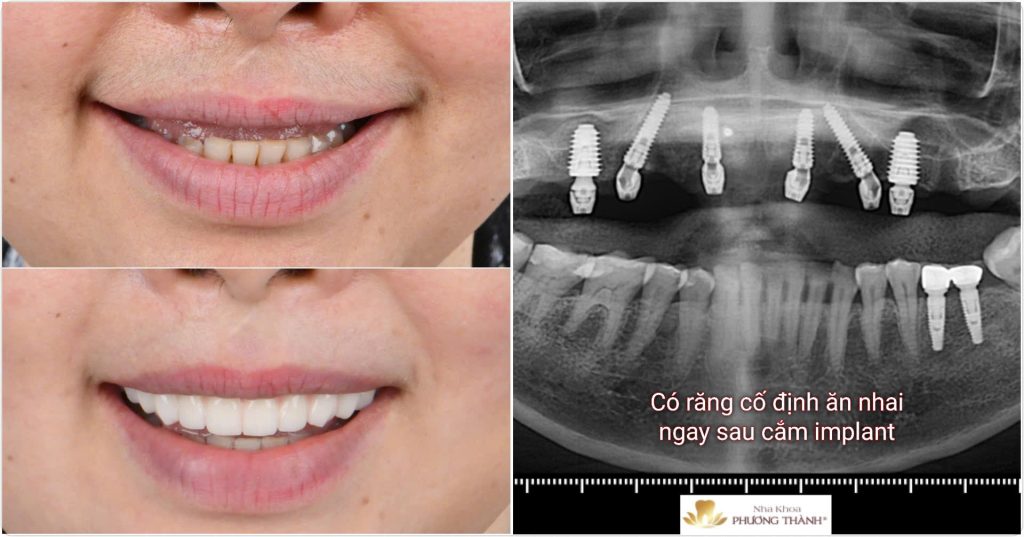
Patients who meet the criteria for immediate loading on implants can receive a complete set of new teeth right away, ensuring natural aesthetics when speaking and smiling, comfortable chewing, and maximum prevention of jawbone resorption. Most importantly, treatment time is reduced, and temporary teeth are not required—helping patients save on follow-up costs and eliminating the need for additional visits to complete the final restoration.
Once treatment is completed, the dentist will provide instructions for at-home oral care and recommend routine check-ups every 6 months.
Phuong Thanh Dental Clinic is proud to be home to a team of leading dental specialists. In addition to delivering outstanding treatment quality, our dentists continuously and proactively enhance their professional expertise. Through regular seminars and in-depth knowledge-sharing programs, we stay up to date with the latest trends and treatment methods, enabling us to provide patients with the most optimal and effective dental solutions.
BLOG
Q&A
You can book an appointment online with Phuong Thanh Dental Clinic through the following platforms: our Website, Facebook, Zalo OA, and TikTok.
You should visit the dental clinic for a routine check-up every 6 months. This helps maintain good oral hygiene and allows early detection of dental problems or early-stage oral lesions.
In fact, orthodontic treatment is not only for adults. According to dental experts, ages 6–10 are considered the “golden period” for orthodontic evaluation and early intervention. Early check-ups help detect and correct bite misalignments, allowing a child’s facial structure to develop more harmoniously.
Porcelain veneers may be recommended in the following cases:
Severely discolored front teeth that cannot be whitened
Old fillings that have changed color
Teeth with worn edges, cracks, or chips
Uneven, damaged adjacent teeth or front teeth
Gaps, short teeth, mild misalignment, or spacing that is not too large
Butterfly-shaped front teeth
Dental implant placement is generally not painful, as local anesthesia is used during the procedure. After the anesthesia wears off, the dentist will prescribe pain relief and medications to support healing. Each implant placement typically takes about 15 minutes per implant post.
The lifespan of porcelain crowns depends on several factors:
Material: All-ceramic crowns are usually more durable than metal-ceramic crowns.
Technique: A skilled dentist ensures proper fit and strong bonding.
Care: Proper oral hygiene and regular dental check-ups help extend the lifespan of crowns.
There are two common types of porcelain crowns: metal-ceramic crowns and all-ceramic crowns.
Metal-ceramic crowns: Over time, the outer porcelain layer may wear down from chewing. The metal core can oxidize and become visible, causing dark gum lines.
All-ceramic crowns: This issue rarely occurs because there is no metal core, helping maintain a more natural appearance without dark gum lines.
If a tooth is broken or extracted, you should not delay tooth replacement—even if the cost is high or the missing tooth is not visible.
When a tooth is lost, adjacent teeth tend to shift into the empty space, making future tooth replacement more difficult. This movement can also affect jaw structure and eventually alter your facial appearance.
To prevent reduced effectiveness or complications from local anesthesia, you should avoid alcohol and beer for at least one day before treatment. You should also inform your dentist about any medications you are taking and any known drug allergies.
You can help prevent tooth decay by following these measures:
Visit the dental clinic for routine check-ups every 6 months.
Limit consumption of sweets, candies, sugary foods, and carbonated drinks. Rinse your mouth with mouthwash after consuming sweets or soft drinks. If mouthwash is not available, drink some water instead.
Avoid drinking soft drinks, fruit juices, or similar beverages before bedtime or after brushing your teeth. At night, saliva production decreases, allowing these drinks to erode tooth enamel. You should only drink plain water before bed.
NEWS
WORKING HOURS