




Dental Implants – Get Your Teeth Immediately, Without Disrupting Your Life
One of the biggest concerns for patients considering dental implants is not necessarily the implant placement itself, but: “After getting...
 Published: 10/05/2025
Dental Knowledge
Published: 10/05/2025
Dental Knowledge
A low-attached labial frenum is a condition in which the upper lip frenum attaches close to the cervical area of the teeth, and may even extend to the marginal gingiva or the interdental papilla between the central incisors. This is an anatomical characteristic that can be found in both children and adults. In some cases, an abnormally attached labial frenum may not only affect aesthetics but may also be associated with function and the developmental process of the anterior tooth region.
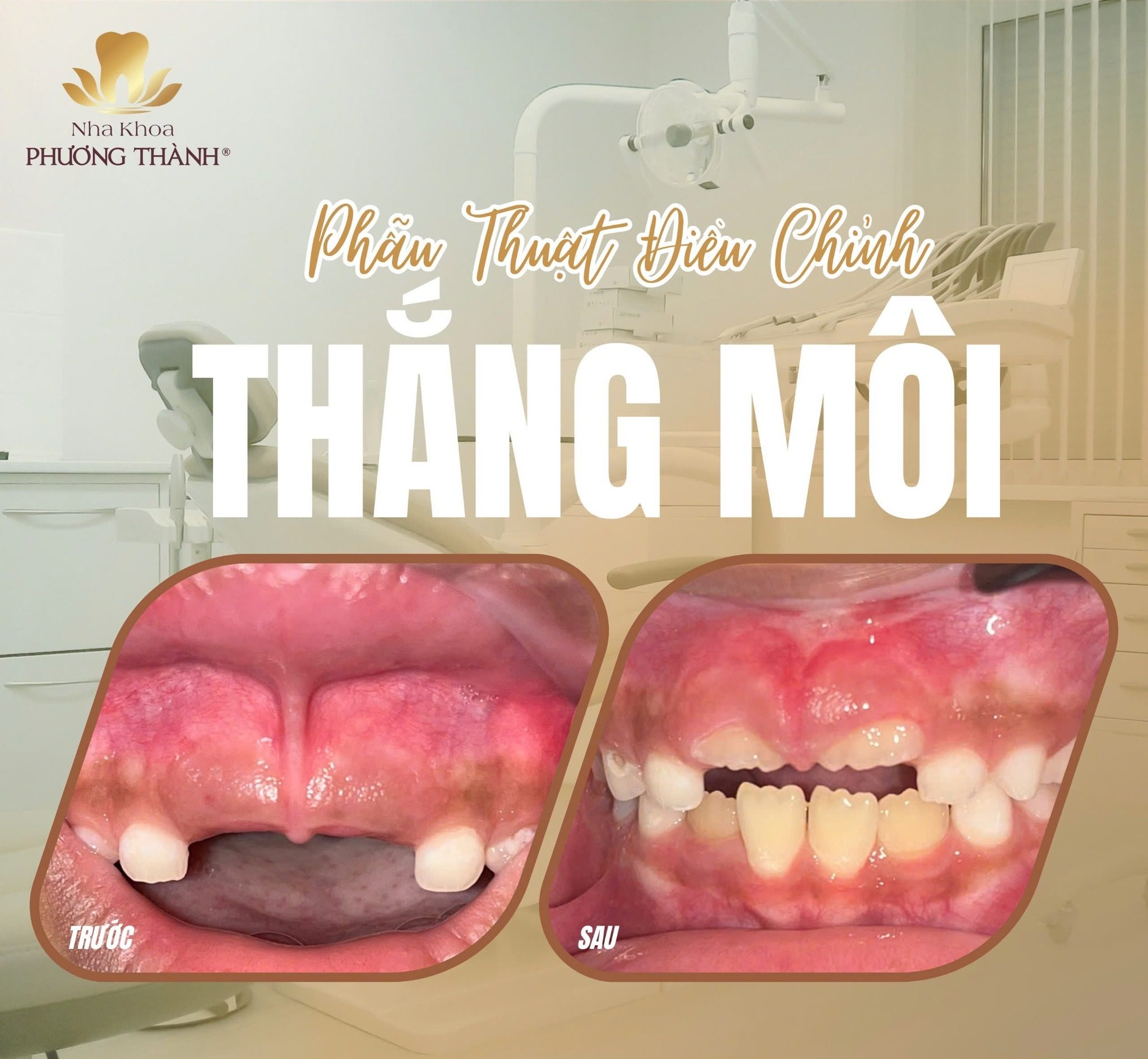
When the labial frenum is low-attached and exerts a noticeable pulling force, it may lead to several effects such as:
In cases with clear clinical indications, the dentist may consider performing a labial frenectomy to eliminate abnormal soft tissue traction and help improve the anatomical conditions of the tooth–gingiva region.
Not every case of a low-attached labial frenum requires intervention. Treatment should only be indicated after a direct clinical examination and evaluation based on factors such as:
If the labial frenum genuinely affects function, aesthetics, or the progress of dental treatment, intervention at the appropriate time may help support more stable long-term treatment outcomes.
Currently, laser labial frenectomy is one of the commonly selected methods in dentistry thanks to its precision and its ability to support effective soft tissue control.
This procedure may help:
Clearer clinical crown exposure is not only meaningful from an aesthetic standpoint, but also helps the dentist more easily establish a comprehensive treatment plan, especially when intervention is needed in the anterior region.
Compared with traditional soft tissue intervention methods, laser labial frenectomy is often highly regarded for several advantages such as:
However, treatment effectiveness depends not only on the technology itself, but also on accurate case selection and diagnosis, the clinical technique, and proper post-treatment follow-up.
Although the labial frenum is a small anatomical structure, it is closely related to gingival aesthetics, the stability of the incisor spacing, and the overall treatment plan. Therefore, before indicating a labial frenectomy, the dentist must thoroughly assess both the anatomical factors and the actual treatment needs of each individual case.
Intervening at the right time and for the right indication helps avoid unnecessary treatment while optimizing long-term outcomes, especially in cases related to orthodontics, restorations, or anterior aesthetic treatment.
At Phuong Thanh Dental Clinic, every case is carefully examined and clinically evaluated before any treatment indication is made. For cases requiring soft tissue intervention, the dentist will consider the most appropriate method to support effective, safe treatment that is harmonized with each patient’s overall dental treatment plan.
One of the biggest concerns for patients considering dental implants is not necessarily the implant placement itself, but: “After getting...
Dental Floss – A Small Tool with a Big Role in Oral Care Dental floss is one of the oral...

Parents should not overlook common oral health problems in children such as tooth decay, gingivitis, pulpitis, and tongue-tie. Early detection...
What Are Exogenous Chromogenic Stains on Teeth? Images of Exogenous Chromogenic Stains on Teeth Exogenous chromogenic stains on teeth are...
WORKING HOURS