



Dental Implants – Get Your Teeth Immediately, Without Disrupting Your Life
One of the biggest concerns for patients considering dental implants is not necessarily the implant placement itself, but: “After getting...
 Published: 13/07/2025
Dental Knowledge
Published: 13/07/2025
Dental Knowledge
Tooth No. 6 is the first permanent molar to erupt, playing an important role in chewing, distributing biting forces, and maintaining occlusal stability. Because it is subjected to heavy daily forces, Tooth No. 6 is also a site that is prone to issues such as tooth decay, occlusal wear, or fracture of tooth structure.
In these cases, occlusal surface reconstruction for Tooth No. 6 is not simply about filling the missing portion of the tooth, but rather a restorative process that requires a high level of precision in anatomy, function, and occlusion.
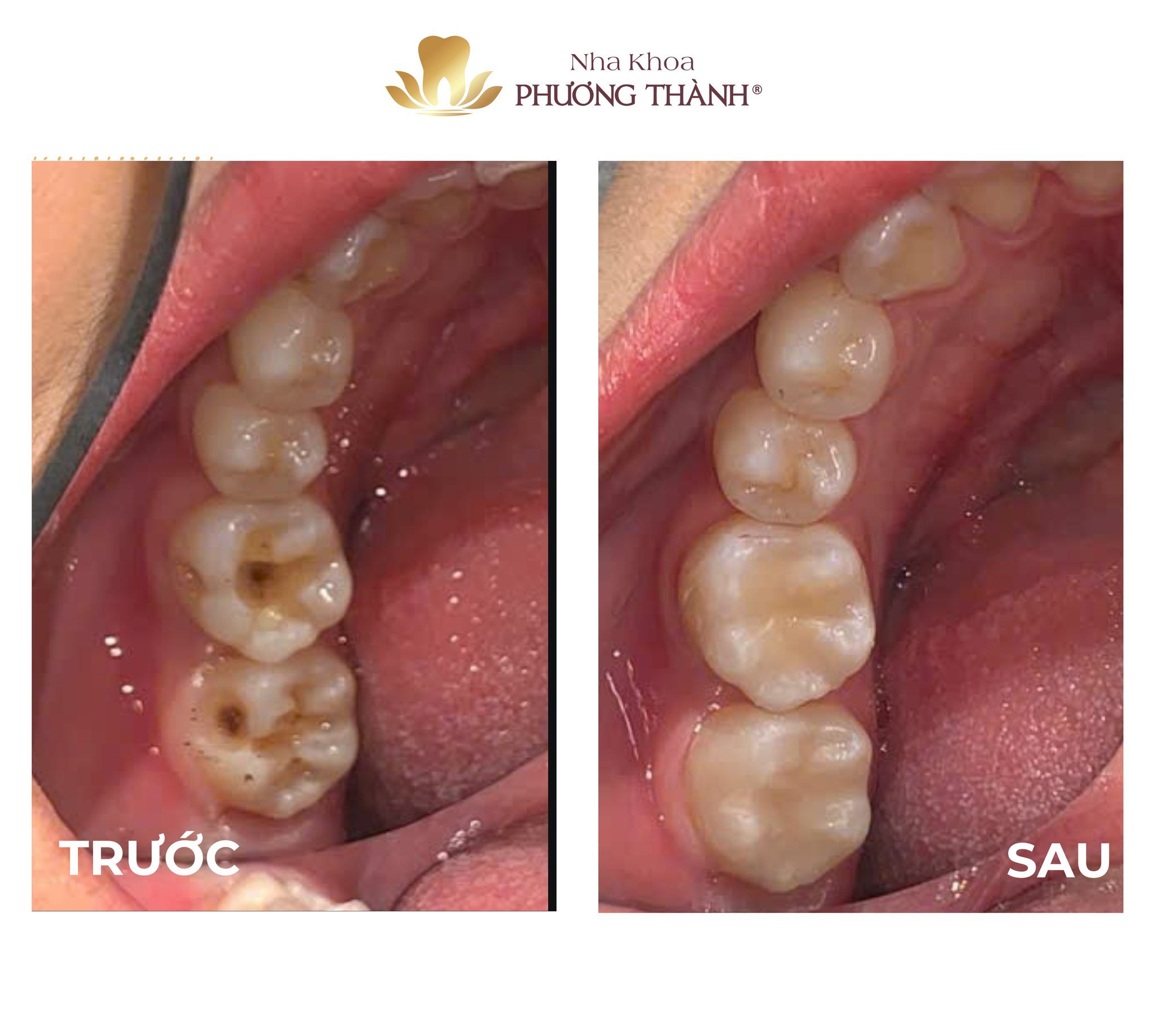
Tooth No. 6 usually erupts at around 6 years old and is one of the teeth that plays a major role in the chewing system. This tooth:
When Tooth No. 6 is damaged and not properly restored, chewing function and occlusal balance may be affected over time.
This is a technique that uses restorative material to rebuild the occlusal surface that has lost tooth structure due to:
However, for a large molar such as Tooth No. 6, the treatment goal is not only to restore the surface shape, but also to ensure strength, stable chewing function, and harmonious occlusal relationships.
The occlusal surface of Tooth No. 6 has a complex anatomical structure with characteristic cusps, grooves, and pits. Accurately reproducing these details helps to:
This is a key factor in determining whether a filling is truly “functionally correct.”
If the occlusal surface is restored too high, too low, or with incorrect contact points, the patient may experience:
Therefore, checking and adjusting the occlusion after the filling is an essential step.
Tooth No. 6 is an area exposed to heavy chewing forces, so the restorative material must perform well in terms of:
Choosing the right material helps improve restoration effectiveness and extend the lifespan of the filling.
A properly completed filling should not only have the correct shape, but also be well-finished on the surface to:
A dentist may recommend restoring the occlusal surface of Tooth No. 6 in the following cases:
If treated early, restorative filling can help preserve more natural tooth structure and reduce the risk of needing more extensive treatment later on.
At Phuong Thanh Dental Clinic, occlusal surface reconstruction is not only focused on filling the missing tooth structure, but also emphasizes occlusal anatomy, precise bite adjustment, and load-bearing function after restoration.
Every detail on the chewing surface needs to be restored carefully, because this is an area that is constantly under force yet is also often underestimated if not treated with proper technique.
One of the biggest concerns for patients considering dental implants is not necessarily the implant placement itself, but: “After getting...
Dental Floss – A Small Tool with a Big Role in Oral Care Dental floss is one of the oral...

Parents should not overlook common oral health problems in children such as tooth decay, gingivitis, pulpitis, and tongue-tie. Early detection...
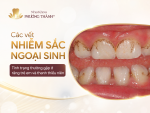
What Are Exogenous Chromogenic Stains on Teeth? Images of Exogenous Chromogenic Stains on Teeth Exogenous chromogenic stains on teeth are...
WORKING HOURS