




Dental Implants – Get Your Teeth Immediately, Without Disrupting Your Life
One of the biggest concerns for patients considering dental implants is not necessarily the implant placement itself, but: “After getting...
 Published: 16/08/2025
Dental Knowledge
Published: 16/08/2025
Dental Knowledge
A front tooth with a vertical crack caused by trauma is a condition that can seriously affect both aesthetics and chewing function, and may even lead to tooth loss if not treated promptly. In many cases, if properly assessed and managed, the tooth can still be preserved instead of extracted.
At Phuong Thanh Dental Clinic, in cases of a front tooth with a vertical crack extending close to the pulp chamber, the dentist may indicate a “3-in-1” restorative protocol consisting of: root canal treatment – cast post and core – ceramic bridge restoration, in order to preserve as much natural tooth structure as possible and restore the tooth in a stable way.
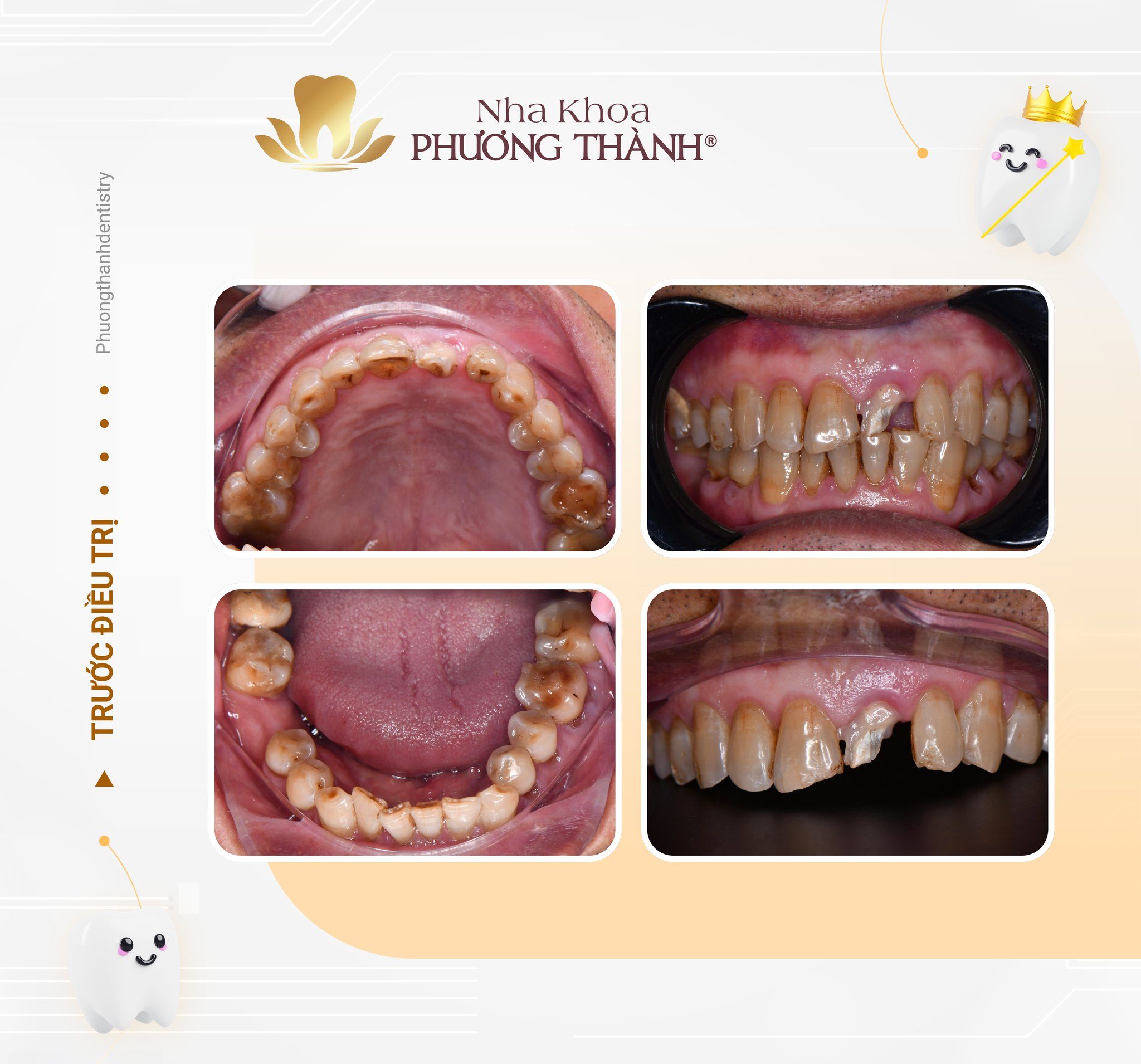
The patient came to the clinic with the following condition:
This is a condition that should be treated early to reduce the risk of infection and increase the chances of preserving the remaining tooth structure.
In the first step, the dentist performs:
Root canal treatment helps control infection, relieve pain, and create a foundation for restoring the tooth crown.
After root canal treatment, the remaining tooth structure is often not strong enough to support a final restoration. At this stage, the dentist will perform a cast post and core in order to:
This is a particularly important step in cases of front teeth with major cracks, fractures, or weakened structure.
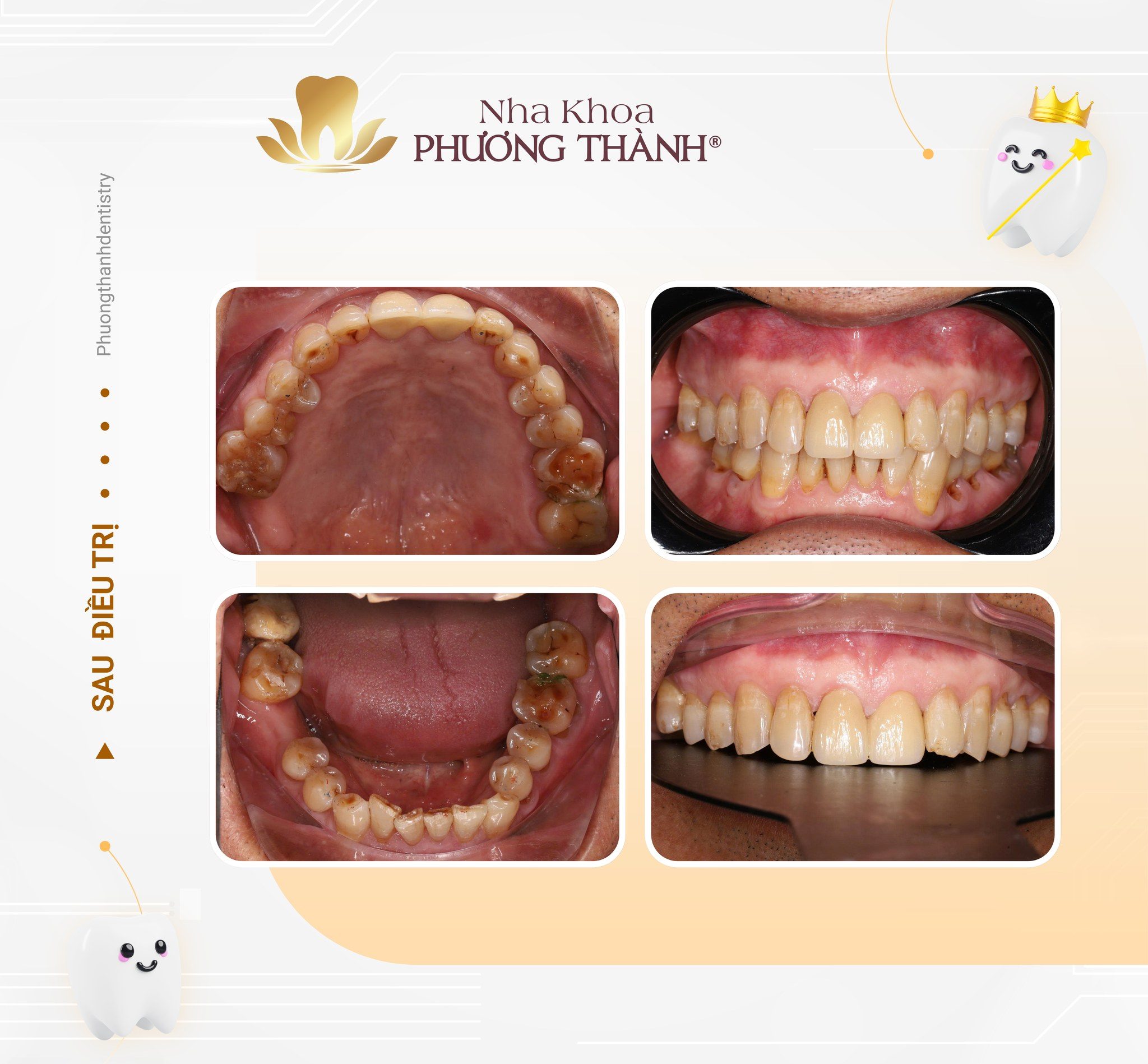
In the final stage, the dentist restores the area with a ceramic bridge in the 11–21 front tooth region in order to:
The ceramic restoration is designed to harmonize with adjacent teeth while ensuring a precise fit and proper force distribution.
After completing treatment, the patient may achieve several benefits such as:
You should visit a dental clinic early if you experience any of the following signs:
Early examination helps the dentist accurately assess the extent of the damage and choose the most appropriate treatment option.
One of the biggest concerns for patients considering dental implants is not necessarily the implant placement itself, but: “After getting...

Dental Floss – A Small Tool with a Big Role in Oral Care Dental floss is one of the oral...

Parents should not overlook common oral health problems in children such as tooth decay, gingivitis, pulpitis, and tongue-tie. Early detection...
What Are Exogenous Chromogenic Stains on Teeth? Images of Exogenous Chromogenic Stains on Teeth Exogenous chromogenic stains on teeth are...
WORKING HOURS