




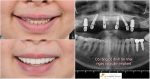
Dental Implants – Get Your Teeth Immediately, Without Disrupting Your Life
One of the biggest concerns for patients considering dental implants is not necessarily the implant placement itself, but: “After getting...
 Published: 25/10/2025
Dental Knowledge
Published: 25/10/2025
Dental Knowledge
The lingual frenulum is a thin band of tissue located underneath the tongue, connecting the underside of the tongue to the floor of the mouth. This is a completely normal anatomical structure. However, when the frenulum is too short, thick, or attached in an unfavorable position, tongue movement may become restricted and affect several important functions during a child’s development.
Although it may seem like a relatively minor structural abnormality, tongue-tie can lead to a number of long-term effects if it is not detected and managed at the right time.
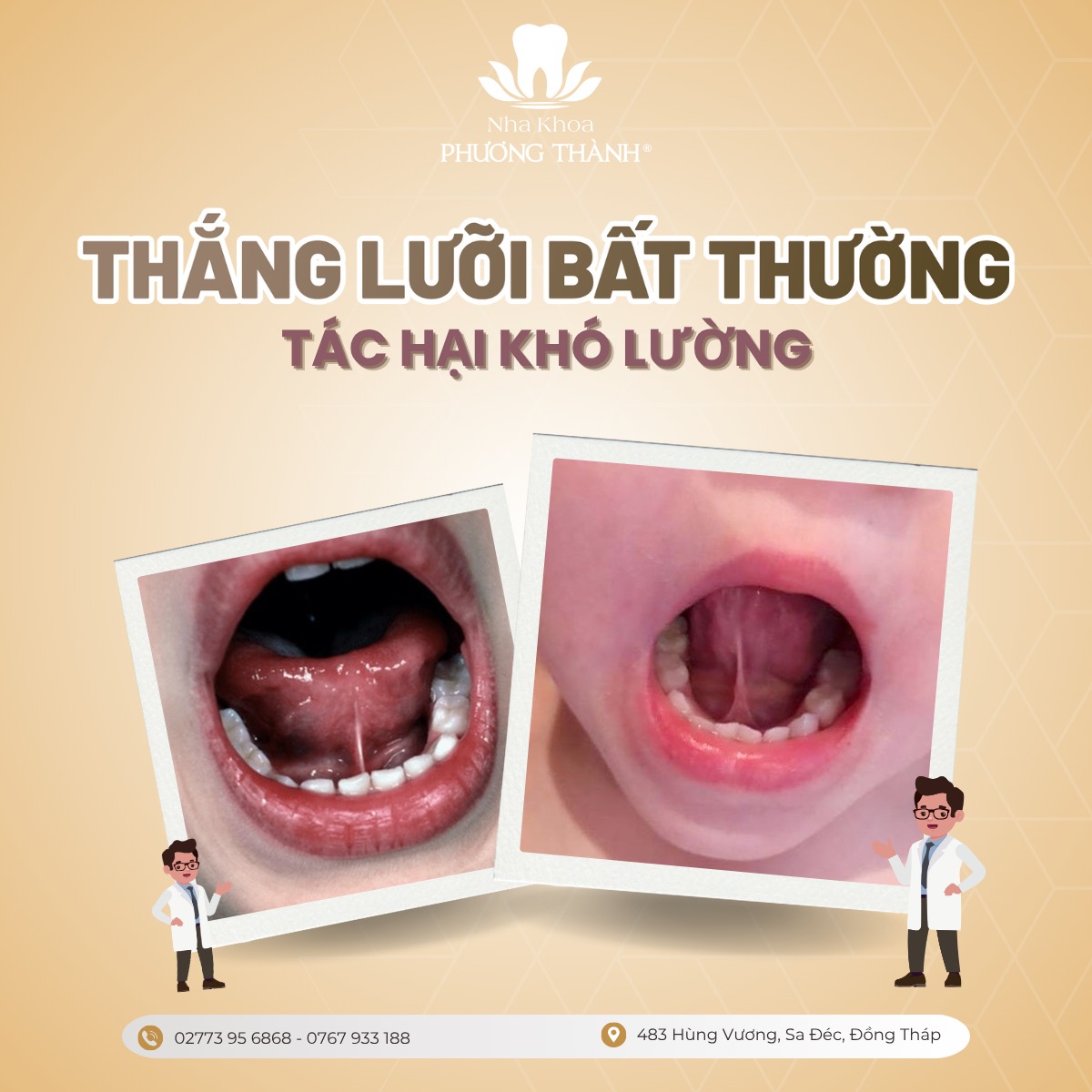
1. Causing feeding difficulties in infants and young children
In newborns and young children, the tongue plays an important role in creating suction and maintaining effective feeding. When tongue movement is restricted, a child may have difficulty latching properly, feed weakly, nurse for a long time without getting enough milk, or become tired quickly during feeding.
If this continues, it may affect the amount of milk the child receives, increasing the risk of poor weight gain and affecting nutritional development during the early stages of life.
2. Affecting speech development and pronunciation
The tongue is an essential organ for producing sounds and controlling pronunciation. When a short lingual frenulum limits the tongue’s range of motion, children may have difficulty pronouncing certain sounds that require flexibility of the tongue tip and tongue body.
If not detected and supported early, this condition may lead to unclear speech, speech distortion, or delayed development of language skills in some children.
3. Making oral hygiene more difficult
Limited tongue movement can also affect the mouth’s natural self-cleaning ability. When the tongue cannot reach or move freely to certain areas, children may have more difficulty cleaning the inner surfaces of the teeth, the floor of the mouth, or the areas around the dental arches.
Over time, this may increase the risk of plaque buildup, tooth decay, bad breath, or other oral hygiene problems if not monitored and managed properly.
4. Affecting confidence in communication
In older children, when speech is noticeably affected, they may become hesitant to speak, lose confidence in communication, or feel shy in school and daily social settings. This impact is not only functional but may also influence a child’s emotional well-being and social development.
Parents should consider having their child checked if they notice any of the following signs:
Early evaluation helps the dentist assess the actual impact of the tongue-tie on feeding, speech, and tongue mobility, and determine whether monitoring or intervention is appropriate.
In cases where tongue-tie clearly limits function, the dentist may recommend a lingual frenectomy. This is a relatively simple procedure, quick to perform, and minimally invasive when properly indicated.
After treatment, some children may also need guidance with tongue mobility exercises or speech follow-up to support better functional recovery, especially in cases that are identified later.
Although tongue-tie may seem like a small structural issue, it can affect many important aspects of a child’s development, from feeding and eating to speech and confidence in communication.
Early detection and timely intervention can help improve tongue mobility, support clearer speech, enhance feeding ability, and allow children to grow with greater confidence in daily life.
One of the biggest concerns for patients considering dental implants is not necessarily the implant placement itself, but: “After getting...
Dental Floss – A Small Tool with a Big Role in Oral Care Dental floss is one of the oral...
Parents should not overlook common oral health problems in children such as tooth decay, gingivitis, pulpitis, and tongue-tie. Early detection...
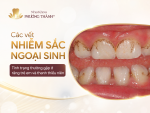
What Are Exogenous Chromogenic Stains on Teeth? Images of Exogenous Chromogenic Stains on Teeth Exogenous chromogenic stains on teeth are...
WORKING HOURS